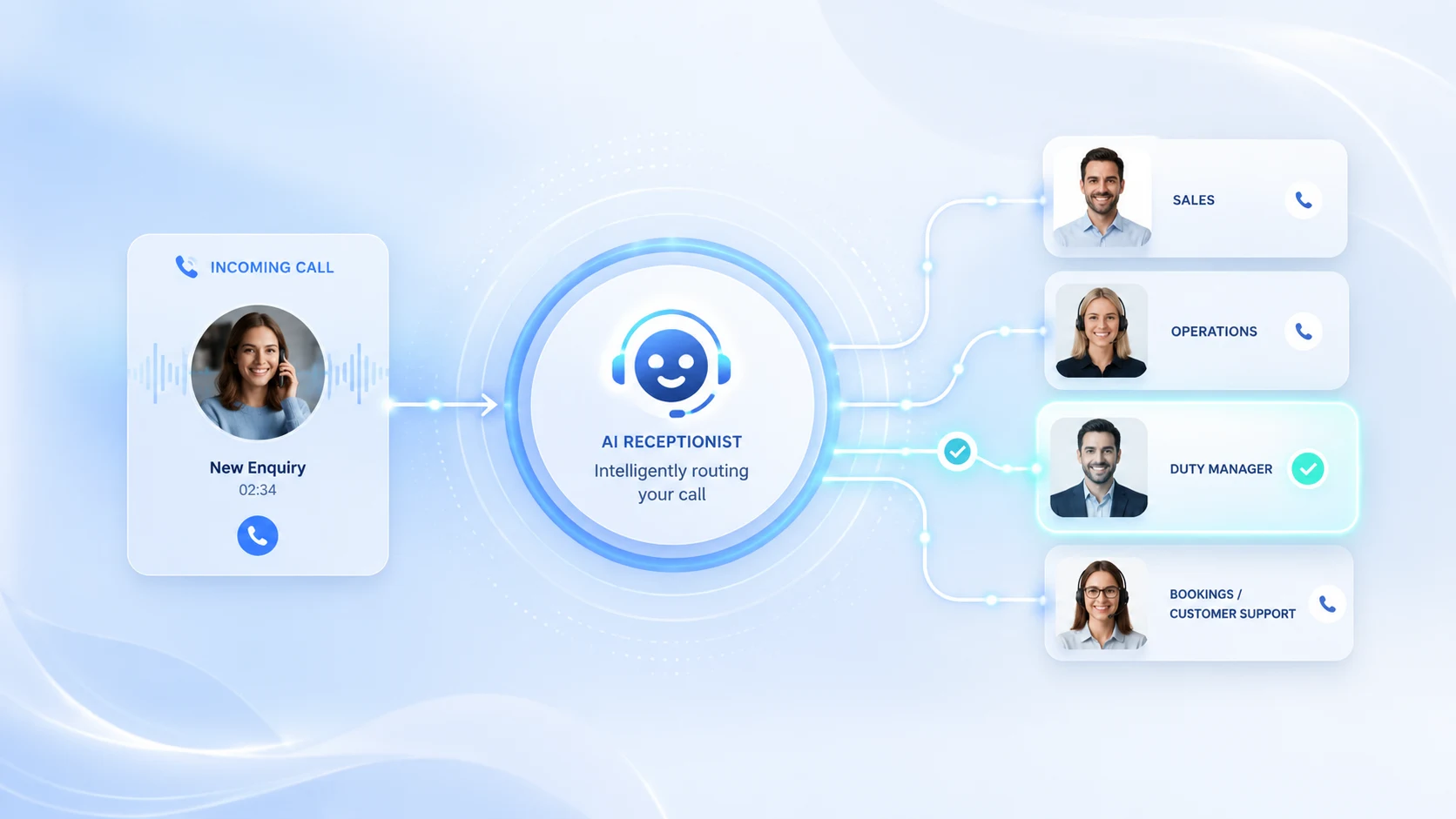
How does overflow call answering work?
The business forwards its usual telephone line to a temporary number. When a customer calls, the receptionist answers using the configured greeting and asks for the information selected during setup.
This may include the caller’s name, contact number, reason for calling, requested next step and other details relevant to the business. Once the conversation is complete, the receptionist identifies the most relevant configured employee and sends the summary to that person.
When should a business use overflow cover?
Overflow cover is useful whenever call demand temporarily exceeds the internal team’s ability to answer. This may happen because of staff sickness, annual leave, lunch periods, meetings, training, seasonal demand, marketing activity or an unusually busy trading day.
It can also support businesses running open days or events, where the team needs to focus on visitors while incoming enquiries continue.
Overflow answering versus voicemail
Voicemail records whatever the caller chooses to leave. Some callers provide a complete message, while others leave very little information or hang up without recording anything.
A receptionist can ask structured questions and collect the details the business actually requires. This can make the eventual handover easier to understand and give the caller confidence that the enquiry has been received.
Temporary cover versus permanent outsourcing
Some organisations require a permanent outsourced reception service. Others already have an internal team and only need additional support during specific periods.
One Day Receptionist is intended for the second situation. The service can be configured for temporary use, activated for 24 hours and reused later without requiring an ongoing subscription.
What information can be captured?
The exact information and routing depend on the setup selected by the business. Typical examples include the caller’s name, telephone number, reason for calling, message, callback request, preferred response time and whether the enquiry appears urgent.
Callers can also receive basic configured information such as business opening hours or website details.
What happens after each call?
After the required details have been collected, the receptionist selects the most relevant configured employee and sends that person the call summary. The business can then review the message and decide how and when to respond.
The receptionist does not replace the business’s decision-making or promise actions that have not been approved. Its role is to understand the enquiry, route it to the right configured employee and provide that person with a useful handover.
How quickly can overflow cover be arranged?
The service is designed for short-term and urgent use. The business chooses the receptionist type, enters its details, configures what should be collected and completes activation.
Once active, the business can forward its calls to the temporary number. The 24-hour cover period starts from activation.
Who is overflow call answering suitable for?
It can support estate agents, legal practices, trades, clinics, garages, property businesses, professional service firms, event organisers and other businesses that rely on incoming telephone enquiries.
The most important factor is not the industry. It is whether unanswered calls could result in lost customers, delayed service or unnecessary pressure on the existing team.